A practical business workflow from planning rooms and capture points to connected 360° scenes, a tested website embed and a clear maintenance routine.
A virtual tour is not a single panorama file. It is a controlled workflow in which room preparation, safe capture, version management, scene linking, website performance and regular review form one result. In this guide, Insta360 identifies the 360° capture stage; model and platform compatibility must always be verified before production.

1. Start with the visitor's question, not the camera
At this stage the team needs to define the production decisions required for ‘Start with the visitor's question, not the camera’; The decision is recorded before capture because every later scene, link and technical choice must be judged against one clear purpose; This separates a necessary result from an attractive addition that does not help the visitor.
The practical output is a written, reviewable deliverable for ‘Start with the visitor's question, not the camera’; It must be understandable to a colleague who was not present during capture; A reviewable artefact reduces dependence on memory, supports recovery after an interruption and shows exactly which version is waiting for approval.
The quality check is to test the output of ‘Start with the visitor's question, not the camera’ against its acceptance criteria; Record the result with the date, device and responsible person instead of marking it only as “done”; If the check fails, repair the preceding step and repeat the same scenario so that the evidence remains comparable.
The key risk is that unclear ownership or missing evidence could weaken ‘Start with the visitor's question, not the camera’; Marketing copy cannot remove this risk after launch; A specific acceptance criterion, a preserved source file and the ability to return to a previously approved version provide a practical control without pretending that every platform is identical.
Define the production decisions required for ‘start with the visitor's question, not the camera’: management should see the connection between visitor experience, production work and ownership; When a stage has a defined input, output and check, cost and timing can be discussed as work units rather than as the vague promise to “make a virtual tour”.
2. Define scope and decision owners
At this stage the team needs to define the production decisions required for ‘Define scope and decision owners’; The decision is recorded before capture because every later scene, link and technical choice must be judged against one clear purpose; This separates a necessary result from an attractive addition that does not help the visitor.
The practical output is a written, reviewable deliverable for ‘Define scope and decision owners’; It must be understandable to a colleague who was not present during capture; A reviewable artefact reduces dependence on memory, supports recovery after an interruption and shows exactly which version is waiting for approval.
The quality check is to test the output of ‘Define scope and decision owners’ against its acceptance criteria; Record the result with the date, device and responsible person instead of marking it only as “done”; If the check fails, repair the preceding step and repeat the same scenario so that the evidence remains comparable.
The key risk is that unclear ownership or missing evidence could weaken ‘Define scope and decision owners’; Marketing copy cannot remove this risk after launch; A specific acceptance criterion, a preserved source file and the ability to return to a previously approved version provide a practical control without pretending that every platform is identical.
Define the production decisions required for ‘define scope and decision owners’: management should see the connection between visitor experience, production work and ownership; When a stage has a defined input, output and check, cost and timing can be discussed as work units rather than as the vague promise to “make a virtual tour”.
Ownership and acceptance criteria can sit inside a digital implementation plan, keeping the 360° work connected with the wider website implementation.
3. Choose rooms and the visitor route
At this stage the team needs to define the production decisions required for ‘Choose rooms and the visitor route’; The decision is recorded before capture because every later scene, link and technical choice must be judged against one clear purpose; This separates a necessary result from an attractive addition that does not help the visitor.
The practical output is a written, reviewable deliverable for ‘Choose rooms and the visitor route’; It must be understandable to a colleague who was not present during capture; A reviewable artefact reduces dependence on memory, supports recovery after an interruption and shows exactly which version is waiting for approval.
The quality check is to test the output of ‘Choose rooms and the visitor route’ against its acceptance criteria; Record the result with the date, device and responsible person instead of marking it only as “done”; If the check fails, repair the preceding step and repeat the same scenario so that the evidence remains comparable.
The key risk is that unclear ownership or missing evidence could weaken ‘Choose rooms and the visitor route’; Marketing copy cannot remove this risk after launch; A specific acceptance criterion, a preserved source file and the ability to return to a previously approved version provide a practical control without pretending that every platform is identical.
Define the production decisions required for ‘choose rooms and the visitor route’: management should see the connection between visitor experience, production work and ownership; When a stage has a defined input, output and check, cost and timing can be discussed as work units rather than as the vague promise to “make a virtual tour”.
4. Prepare the room, lighting and privacy
At this stage the team needs to define the production decisions required for ‘Prepare the room, lighting and privacy’; The decision is recorded before capture because every later scene, link and technical choice must be judged against one clear purpose; This separates a necessary result from an attractive addition that does not help the visitor.
The practical output is a written, reviewable deliverable for ‘Prepare the room, lighting and privacy’; It must be understandable to a colleague who was not present during capture; A reviewable artefact reduces dependence on memory, supports recovery after an interruption and shows exactly which version is waiting for approval.
The quality check is to test the output of ‘Prepare the room, lighting and privacy’ against its acceptance criteria; Record the result with the date, device and responsible person instead of marking it only as “done”; If the check fails, repair the preceding step and repeat the same scenario so that the evidence remains comparable.
The key risk is that unclear ownership or missing evidence could weaken ‘Prepare the room, lighting and privacy’; Marketing copy cannot remove this risk after launch; A specific acceptance criterion, a preserved source file and the ability to return to a previously approved version provide a practical control without pretending that every platform is identical.
Define the production decisions required for ‘prepare the room, lighting and privacy’: management should see the connection between visitor experience, production work and ownership; When a stage has a defined input, output and check, cost and timing can be discussed as work units rather than as the vague promise to “make a virtual tour”.
5. Check camera, tripod and app compatibility
At this stage the team needs to define the production decisions required for ‘Check camera, tripod and app compatibility’; The decision is recorded before capture because every later scene, link and technical choice must be judged against one clear purpose; This separates a necessary result from an attractive addition that does not help the visitor.
The practical output is a written, reviewable deliverable for ‘Check camera, tripod and app compatibility’; It must be understandable to a colleague who was not present during capture; A reviewable artefact reduces dependence on memory, supports recovery after an interruption and shows exactly which version is waiting for approval.
The quality check is to test the output of ‘Check camera, tripod and app compatibility’ against its acceptance criteria; Record the result with the date, device and responsible person instead of marking it only as “done”; If the check fails, repair the preceding step and repeat the same scenario so that the evidence remains comparable.
The key risk is that unclear ownership or missing evidence could weaken ‘Check camera, tripod and app compatibility’; Marketing copy cannot remove this risk after launch; A specific acceptance criterion, a preserved source file and the ability to return to a previously approved version provide a practical control without pretending that every platform is identical.
Define the production decisions required for ‘check camera, tripod and app compatibility’: management should see the connection between visitor experience, production work and ownership; When a stage has a defined input, output and check, cost and timing can be discussed as work units rather than as the vague promise to “make a virtual tour”.
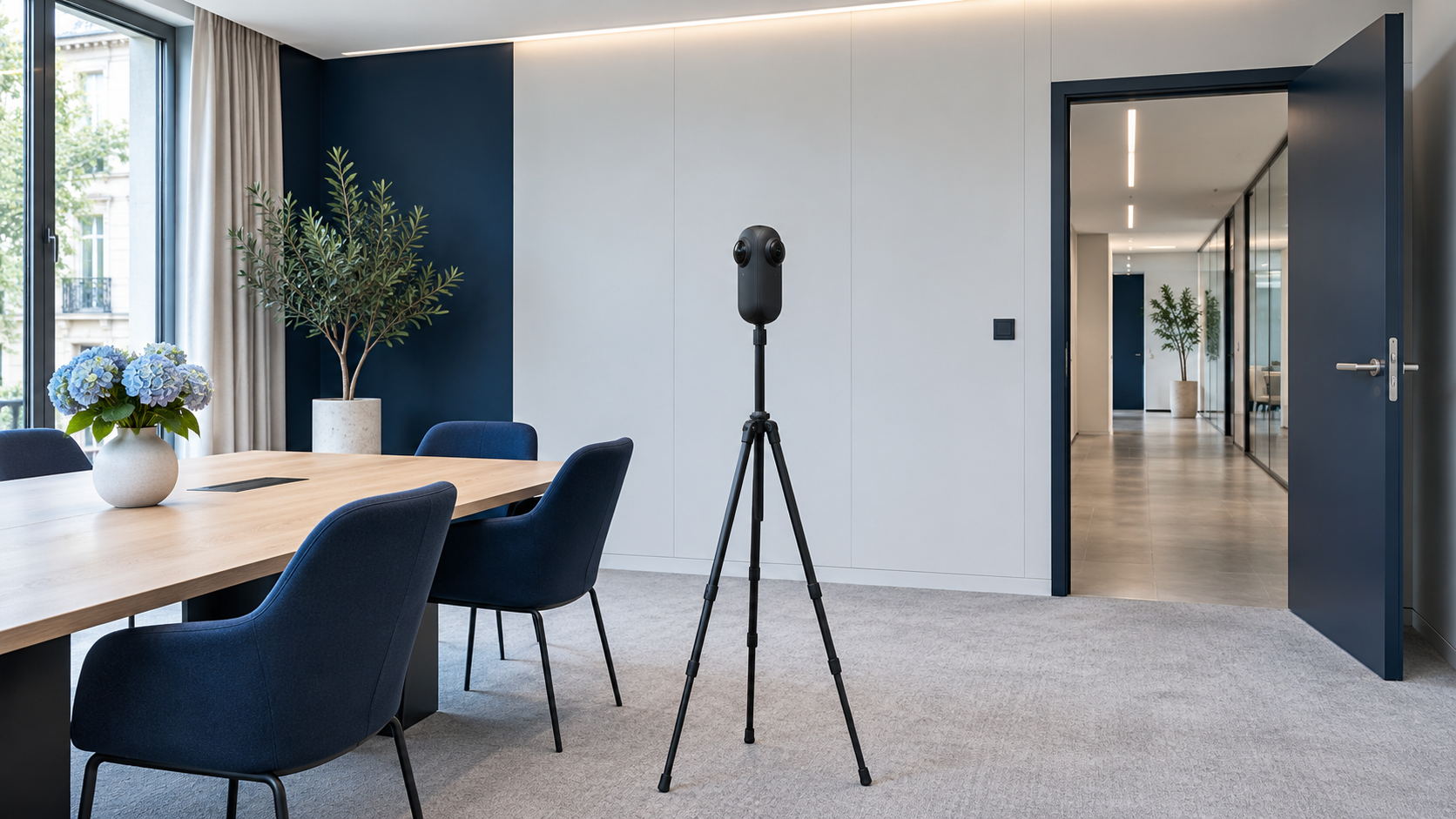
The official Insta360 guide describes a camera, tripod and phone as the working kit and recommends updating camera firmware before capture. Matterport’s current supported-camera list should still be checked immediately before a project because models and app requirements can change. Insta360; Matterport.
6. Place the camera consistently and securely
At this stage the team needs to define the production decisions required for ‘Place the camera consistently and securely’; The decision is recorded before capture because every later scene, link and technical choice must be judged against one clear purpose; This separates a necessary result from an attractive addition that does not help the visitor.
The practical output is a written, reviewable deliverable for ‘Place the camera consistently and securely’; It must be understandable to a colleague who was not present during capture; A reviewable artefact reduces dependence on memory, supports recovery after an interruption and shows exactly which version is waiting for approval.
The quality check is to test the output of ‘Place the camera consistently and securely’ against its acceptance criteria; Record the result with the date, device and responsible person instead of marking it only as “done”; If the check fails, repair the preceding step and repeat the same scenario so that the evidence remains comparable.
The key risk is that unclear ownership or missing evidence could weaken ‘Place the camera consistently and securely’; Marketing copy cannot remove this risk after launch; A specific acceptance criterion, a preserved source file and the ability to return to a previously approved version provide a practical control without pretending that every platform is identical.
Define the production decisions required for ‘place the camera consistently and securely’: management should see the connection between visitor experience, production work and ownership; When a stage has a defined input, output and check, cost and timing can be discussed as work units rather than as the vague promise to “make a virtual tour”.
7. Capture in sequence and keep a position map
At this stage the team needs to define the production decisions required for ‘Capture in sequence and keep a position map’; The decision is recorded before capture because every later scene, link and technical choice must be judged against one clear purpose; This separates a necessary result from an attractive addition that does not help the visitor.
The practical output is a written, reviewable deliverable for ‘Capture in sequence and keep a position map’; It must be understandable to a colleague who was not present during capture; A reviewable artefact reduces dependence on memory, supports recovery after an interruption and shows exactly which version is waiting for approval.
The quality check is to test the output of ‘Capture in sequence and keep a position map’ against its acceptance criteria; Record the result with the date, device and responsible person instead of marking it only as “done”; If the check fails, repair the preceding step and repeat the same scenario so that the evidence remains comparable.
The key risk is that unclear ownership or missing evidence could weaken ‘Capture in sequence and keep a position map’; Marketing copy cannot remove this risk after launch; A specific acceptance criterion, a preserved source file and the ability to return to a previously approved version provide a practical control without pretending that every platform is identical.
Define the production decisions required for ‘capture in sequence and keep a position map’: management should see the connection between visitor experience, production work and ownership; When a stage has a defined input, output and check, cost and timing can be discussed as work units rather than as the vague promise to “make a virtual tour”.
8. Review every scene before leaving
At this stage the team needs to define the production decisions required for ‘Review every scene before leaving’; The decision is recorded before capture because every later scene, link and technical choice must be judged against one clear purpose; This separates a necessary result from an attractive addition that does not help the visitor.
The practical output is a written, reviewable deliverable for ‘Review every scene before leaving’; It must be understandable to a colleague who was not present during capture; A reviewable artefact reduces dependence on memory, supports recovery after an interruption and shows exactly which version is waiting for approval.
The quality check is to test the output of ‘Review every scene before leaving’ against its acceptance criteria; Record the result with the date, device and responsible person instead of marking it only as “done”; If the check fails, repair the preceding step and repeat the same scenario so that the evidence remains comparable.
The key risk is that unclear ownership or missing evidence could weaken ‘Review every scene before leaving’; Marketing copy cannot remove this risk after launch; A specific acceptance criterion, a preserved source file and the ability to return to a previously approved version provide a practical control without pretending that every platform is identical.
Define the production decisions required for ‘review every scene before leaving’: management should see the connection between visitor experience, production work and ownership; When a stage has a defined input, output and check, cost and timing can be discussed as work units rather than as the vague promise to “make a virtual tour”.
9. Preserve originals and control versions
At this stage the team needs to define the production decisions required for ‘Preserve originals and control versions’; The decision is recorded before capture because every later scene, link and technical choice must be judged against one clear purpose; This separates a necessary result from an attractive addition that does not help the visitor.
The practical output is a written, reviewable deliverable for ‘Preserve originals and control versions’; It must be understandable to a colleague who was not present during capture; A reviewable artefact reduces dependence on memory, supports recovery after an interruption and shows exactly which version is waiting for approval.
The quality check is to test the output of ‘Preserve originals and control versions’ against its acceptance criteria; Record the result with the date, device and responsible person instead of marking it only as “done”; If the check fails, repair the preceding step and repeat the same scenario so that the evidence remains comparable.
The key risk is that unclear ownership or missing evidence could weaken ‘Preserve originals and control versions’; Marketing copy cannot remove this risk after launch; A specific acceptance criterion, a preserved source file and the ability to return to a previously approved version provide a practical control without pretending that every platform is identical.
Define the production decisions required for ‘preserve originals and control versions’: management should see the connection between visitor experience, production work and ownership; When a stage has a defined input, output and check, cost and timing can be discussed as work units rather than as the vague promise to “make a virtual tour”.
10. Stitch and export equirectangular 360° images
At this stage the team needs to define the production decisions required for ‘Stitch and export equirectangular 360° images’; The decision is recorded before capture because every later scene, link and technical choice must be judged against one clear purpose; This separates a necessary result from an attractive addition that does not help the visitor.
The practical output is a written, reviewable deliverable for ‘Stitch and export equirectangular 360° images’; It must be understandable to a colleague who was not present during capture; A reviewable artefact reduces dependence on memory, supports recovery after an interruption and shows exactly which version is waiting for approval.
The quality check is to test the output of ‘Stitch and export equirectangular 360° images’ against its acceptance criteria; Record the result with the date, device and responsible person instead of marking it only as “done”; If the check fails, repair the preceding step and repeat the same scenario so that the evidence remains comparable.
The key risk is that unclear ownership or missing evidence could weaken ‘Stitch and export equirectangular 360° images’; Marketing copy cannot remove this risk after launch; A specific acceptance criterion, a preserved source file and the ability to return to a previously approved version provide a practical control without pretending that every platform is identical.
Define the production decisions required for ‘stitch and export equirectangular 360° images’: management should see the connection between visitor experience, production work and ownership; When a stage has a defined input, output and check, cost and timing can be discussed as work units rather than as the vague promise to “make a virtual tour”.
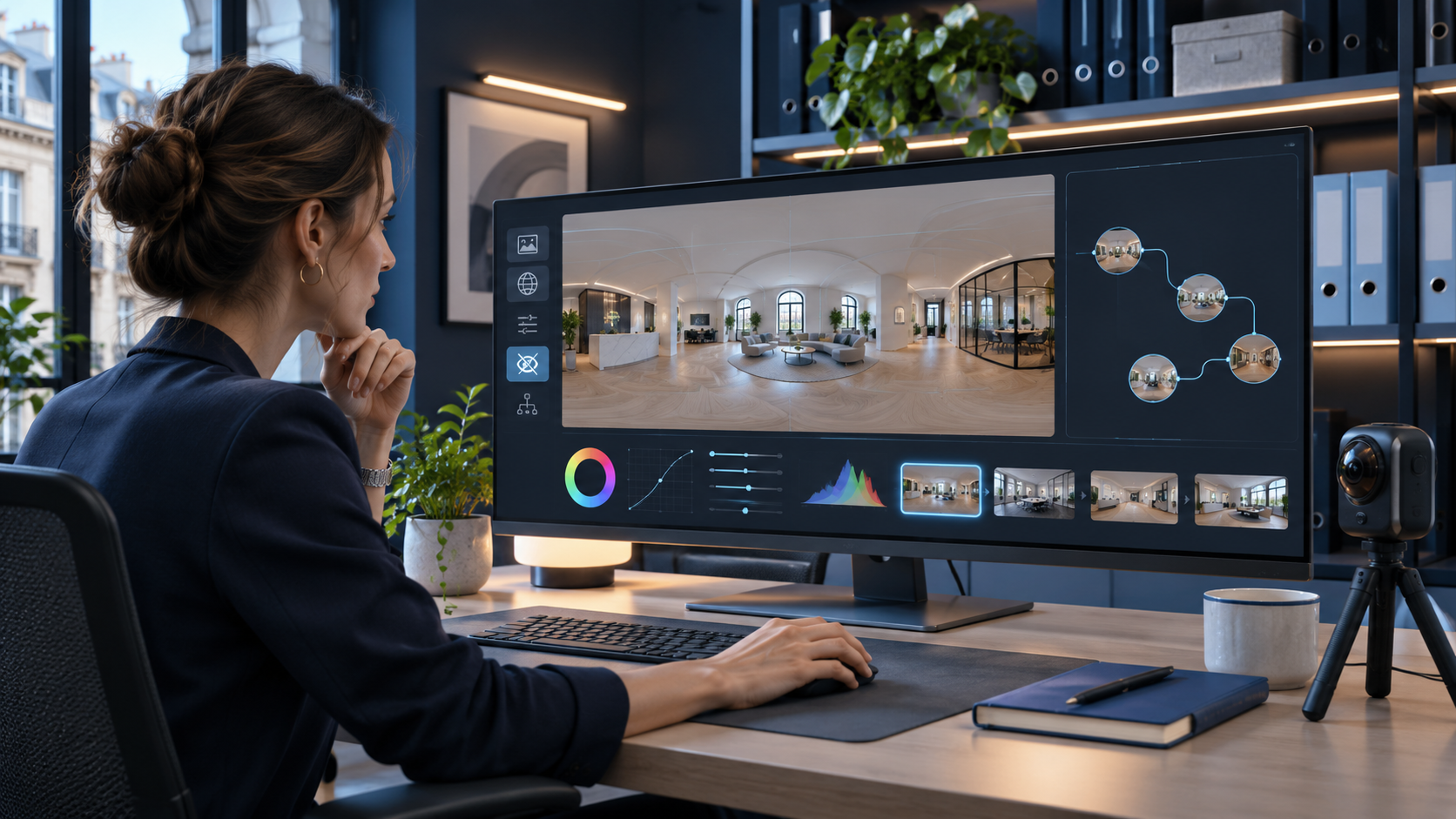
Matterport’s import documentation specifies a 2:1 width-to-height ratio for spherical 360° imagery; in this workflow, Insta360 files are first stitched and exported as an equirectangular 360° photo. This is a technical requirement for that import route, not an automatic quality promise. Matterport Import 360°.
11. Build the scene structure and hotspots
At this stage the team needs to define the production decisions required for ‘Build the scene structure and hotspots’; The decision is recorded before capture because every later scene, link and technical choice must be judged against one clear purpose; This separates a necessary result from an attractive addition that does not help the visitor.
The practical output is a written, reviewable deliverable for ‘Build the scene structure and hotspots’; It must be understandable to a colleague who was not present during capture; A reviewable artefact reduces dependence on memory, supports recovery after an interruption and shows exactly which version is waiting for approval.
The quality check is to test the output of ‘Build the scene structure and hotspots’ against its acceptance criteria; Record the result with the date, device and responsible person instead of marking it only as “done”; If the check fails, repair the preceding step and repeat the same scenario so that the evidence remains comparable.
The key risk is that unclear ownership or missing evidence could weaken ‘Build the scene structure and hotspots’; Marketing copy cannot remove this risk after launch; A specific acceptance criterion, a preserved source file and the ability to return to a previously approved version provide a practical control without pretending that every platform is identical.
Define the production decisions required for ‘build the scene structure and hotspots’: management should see the connection between visitor experience, production work and ownership; When a stage has a defined input, output and check, cost and timing can be discussed as work units rather than as the vague promise to “make a virtual tour”.
12. Add information only where it supports a decision
At this stage the team needs to define the production decisions required for ‘Add information only where it supports a decision’; The decision is recorded before capture because every later scene, link and technical choice must be judged against one clear purpose; This separates a necessary result from an attractive addition that does not help the visitor.
The practical output is a written, reviewable deliverable for ‘Add information only where it supports a decision’; It must be understandable to a colleague who was not present during capture; A reviewable artefact reduces dependence on memory, supports recovery after an interruption and shows exactly which version is waiting for approval.
The quality check is to test the output of ‘Add information only where it supports a decision’ against its acceptance criteria; Record the result with the date, device and responsible person instead of marking it only as “done”; If the check fails, repair the preceding step and repeat the same scenario so that the evidence remains comparable.
The key risk is that unclear ownership or missing evidence could weaken ‘Add information only where it supports a decision’; Marketing copy cannot remove this risk after launch; A specific acceptance criterion, a preserved source file and the ability to return to a previously approved version provide a practical control without pretending that every platform is identical.
Define the production decisions required for ‘add information only where it supports a decision’: management should see the connection between visitor experience, production work and ownership; When a stage has a defined input, output and check, cost and timing can be discussed as work units rather than as the vague promise to “make a virtual tour”.
13. Separate a 360° demonstration from verified 3D surveying
At this stage the team needs to define the production decisions required for ‘Separate a 360° demonstration from verified 3D surveying’; The decision is recorded before capture because every later scene, link and technical choice must be judged against one clear purpose; This separates a necessary result from an attractive addition that does not help the visitor.
The practical output is a written, reviewable deliverable for ‘Separate a 360° demonstration from verified 3D surveying’; It must be understandable to a colleague who was not present during capture; A reviewable artefact reduces dependence on memory, supports recovery after an interruption and shows exactly which version is waiting for approval.
The quality check is to test the output of ‘Separate a 360° demonstration from verified 3D surveying’ against its acceptance criteria; Record the result with the date, device and responsible person instead of marking it only as “done”; If the check fails, repair the preceding step and repeat the same scenario so that the evidence remains comparable.
The key risk is that unclear ownership or missing evidence could weaken ‘Separate a 360° demonstration from verified 3D surveying’; Marketing copy cannot remove this risk after launch; A specific acceptance criterion, a preserved source file and the ability to return to a previously approved version provide a practical control without pretending that every platform is identical.
Define the production decisions required for ‘separate a 360° demonstration from verified 3d surveying’: management should see the connection between visitor experience, production work and ownership; When a stage has a defined input, output and check, cost and timing can be discussed as work units rather than as the vague promise to “make a virtual tour”.
14. Embed the tour on the website with a fallback
At this stage the team needs to define the production decisions required for ‘Embed the tour on the website with a fallback’; The decision is recorded before capture because every later scene, link and technical choice must be judged against one clear purpose; This separates a necessary result from an attractive addition that does not help the visitor.
The practical output is a written, reviewable deliverable for ‘Embed the tour on the website with a fallback’; It must be understandable to a colleague who was not present during capture; A reviewable artefact reduces dependence on memory, supports recovery after an interruption and shows exactly which version is waiting for approval.
The quality check is to test the output of ‘Embed the tour on the website with a fallback’ against its acceptance criteria; Record the result with the date, device and responsible person instead of marking it only as “done”; If the check fails, repair the preceding step and repeat the same scenario so that the evidence remains comparable.
The key risk is that unclear ownership or missing evidence could weaken ‘Embed the tour on the website with a fallback’; Marketing copy cannot remove this risk after launch; A specific acceptance criterion, a preserved source file and the ability to return to a previously approved version provide a practical control without pretending that every platform is identical.
Define the production decisions required for ‘embed the tour on the website with a fallback’: management should see the connection between visitor experience, production work and ownership; When a stage has a defined input, output and check, cost and timing can be discussed as work units rather than as the vague promise to “make a virtual tour”.
15. Optimise loading for mobile devices
At this stage the team needs to define the production decisions required for ‘Optimise loading for mobile devices’; The decision is recorded before capture because every later scene, link and technical choice must be judged against one clear purpose; This separates a necessary result from an attractive addition that does not help the visitor.
The practical output is a written, reviewable deliverable for ‘Optimise loading for mobile devices’; It must be understandable to a colleague who was not present during capture; A reviewable artefact reduces dependence on memory, supports recovery after an interruption and shows exactly which version is waiting for approval.
The quality check is to test the output of ‘Optimise loading for mobile devices’ against its acceptance criteria; Record the result with the date, device and responsible person instead of marking it only as “done”; If the check fails, repair the preceding step and repeat the same scenario so that the evidence remains comparable.
The key risk is that unclear ownership or missing evidence could weaken ‘Optimise loading for mobile devices’; Marketing copy cannot remove this risk after launch; A specific acceptance criterion, a preserved source file and the ability to return to a previously approved version provide a practical control without pretending that every platform is identical.
Define the production decisions required for ‘optimise loading for mobile devices’: management should see the connection between visitor experience, production work and ownership; When a stage has a defined input, output and check, cost and timing can be discussed as work units rather than as the vague promise to “make a virtual tour”.
Connect the embed test with a mobile website performance review so the team evaluates access to the main content as well as panorama sharpness.

16. Test accessibility, languages and controls
At this stage the team needs to define the production decisions required for ‘Test accessibility, languages and controls’; The decision is recorded before capture because every later scene, link and technical choice must be judged against one clear purpose; This separates a necessary result from an attractive addition that does not help the visitor.
The practical output is a written, reviewable deliverable for ‘Test accessibility, languages and controls’; It must be understandable to a colleague who was not present during capture; A reviewable artefact reduces dependence on memory, supports recovery after an interruption and shows exactly which version is waiting for approval.
The quality check is to test the output of ‘Test accessibility, languages and controls’ against its acceptance criteria; Record the result with the date, device and responsible person instead of marking it only as “done”; If the check fails, repair the preceding step and repeat the same scenario so that the evidence remains comparable.
The key risk is that unclear ownership or missing evidence could weaken ‘Test accessibility, languages and controls’; Marketing copy cannot remove this risk after launch; A specific acceptance criterion, a preserved source file and the ability to return to a previously approved version provide a practical control without pretending that every platform is identical.
Define the production decisions required for ‘test accessibility, languages and controls’: management should see the connection between visitor experience, production work and ownership; When a stage has a defined input, output and check, cost and timing can be discussed as work units rather than as the vague promise to “make a virtual tour”.
17. Run acceptance tests with realistic tasks
At this stage the team needs to define the production decisions required for ‘Run acceptance tests with realistic tasks’; The decision is recorded before capture because every later scene, link and technical choice must be judged against one clear purpose; This separates a necessary result from an attractive addition that does not help the visitor.
The practical output is a written, reviewable deliverable for ‘Run acceptance tests with realistic tasks’; It must be understandable to a colleague who was not present during capture; A reviewable artefact reduces dependence on memory, supports recovery after an interruption and shows exactly which version is waiting for approval.
The quality check is to test the output of ‘Run acceptance tests with realistic tasks’ against its acceptance criteria; Record the result with the date, device and responsible person instead of marking it only as “done”; If the check fails, repair the preceding step and repeat the same scenario so that the evidence remains comparable.
The key risk is that unclear ownership or missing evidence could weaken ‘Run acceptance tests with realistic tasks’; Marketing copy cannot remove this risk after launch; A specific acceptance criterion, a preserved source file and the ability to return to a previously approved version provide a practical control without pretending that every platform is identical.
Define the production decisions required for ‘run acceptance tests with realistic tasks’: management should see the connection between visitor experience, production work and ownership; When a stage has a defined input, output and check, cost and timing can be discussed as work units rather than as the vague promise to “make a virtual tour”.
18. Illustrative test: 4 rooms and 8 capture points
At this stage the team needs to define the production decisions required for ‘Illustrative test: 4 rooms and 8 capture points’; The decision is recorded before capture because every later scene, link and technical choice must be judged against one clear purpose; This separates a necessary result from an attractive addition that does not help the visitor.
The practical output is a written, reviewable deliverable for ‘Illustrative test: 4 rooms and 8 capture points’; It must be understandable to a colleague who was not present during capture; A reviewable artefact reduces dependence on memory, supports recovery after an interruption and shows exactly which version is waiting for approval.
The quality check is to test the output of ‘Illustrative test: 4 rooms and 8 capture points’ against its acceptance criteria; Record the result with the date, device and responsible person instead of marking it only as “done”; If the check fails, repair the preceding step and repeat the same scenario so that the evidence remains comparable.
The key risk is that unclear ownership or missing evidence could weaken ‘Illustrative test: 4 rooms and 8 capture points’; Marketing copy cannot remove this risk after launch; A specific acceptance criterion, a preserved source file and the ability to return to a previously approved version provide a practical control without pretending that every platform is identical.
Define the production decisions required for ‘illustrative test: 4 rooms and 8 capture points’: management should see the connection between visitor experience, production work and ownership; When a stage has a defined input, output and check, cost and timing can be discussed as work units rather than as the vague promise to “make a virtual tour”.
19. Define maintenance, access and the archive
At this stage the team needs to define the production decisions required for ‘Define maintenance, access and the archive’; The decision is recorded before capture because every later scene, link and technical choice must be judged against one clear purpose; This separates a necessary result from an attractive addition that does not help the visitor.
The practical output is a written, reviewable deliverable for ‘Define maintenance, access and the archive’; It must be understandable to a colleague who was not present during capture; A reviewable artefact reduces dependence on memory, supports recovery after an interruption and shows exactly which version is waiting for approval.
The quality check is to test the output of ‘Define maintenance, access and the archive’ against its acceptance criteria; Record the result with the date, device and responsible person instead of marking it only as “done”; If the check fails, repair the preceding step and repeat the same scenario so that the evidence remains comparable.
The key risk is that unclear ownership or missing evidence could weaken ‘Define maintenance, access and the archive’; Marketing copy cannot remove this risk after launch; A specific acceptance criterion, a preserved source file and the ability to return to a previously approved version provide a practical control without pretending that every platform is identical.
Define the production decisions required for ‘define maintenance, access and the archive’: management should see the connection between visitor experience, production work and ownership; When a stage has a defined input, output and check, cost and timing can be discussed as work units rather than as the vague promise to “make a virtual tour”.
20. Make the publishing decision from evidence
At this stage the team needs to define the production decisions required for ‘Make the publishing decision from evidence’; The decision is recorded before capture because every later scene, link and technical choice must be judged against one clear purpose; This separates a necessary result from an attractive addition that does not help the visitor.
The practical output is a written, reviewable deliverable for ‘Make the publishing decision from evidence’; It must be understandable to a colleague who was not present during capture; A reviewable artefact reduces dependence on memory, supports recovery after an interruption and shows exactly which version is waiting for approval.
The quality check is to test the output of ‘Make the publishing decision from evidence’ against its acceptance criteria; Record the result with the date, device and responsible person instead of marking it only as “done”; If the check fails, repair the preceding step and repeat the same scenario so that the evidence remains comparable.
The key risk is that unclear ownership or missing evidence could weaken ‘Make the publishing decision from evidence’; Marketing copy cannot remove this risk after launch; A specific acceptance criterion, a preserved source file and the ability to return to a previously approved version provide a practical control without pretending that every platform is identical.
Define the production decisions required for ‘make the publishing decision from evidence’: management should see the connection between visitor experience, production work and ownership; When a stage has a defined input, output and check, cost and timing can be discussed as work units rather than as the vague promise to “make a virtual tour”.
Conclusion: from capture to a manageable website experience
When these 20 stages are evidenced, the virtual tour becomes manageable website content that can be tested, updated and safely rolled back. In the CANIMAPS DIGITAL offer, custom 360° tours and non-standard production are assessed separately after scope agreement.